
One of the most common misconceptions in government contracting is that success comes from volume. More proposals, more opportunities, more submissions.
This approach is fundamentally flawed.
High-performing organizations do not win because they pursue more opportunities. They win because they pursue the right ones.
The Problem with “Spray and Pray”
The “spray and pray” approach is driven by activity, not strategy. It creates operational strain, reduces proposal quality, and ultimately lowers win rates.
Every proposal requires time, resources, and coordination. When those resources are spread too thin, execution suffers.
The solution is not increased effort. It is disciplined selection.
Introducing the Go/No-Go Framework
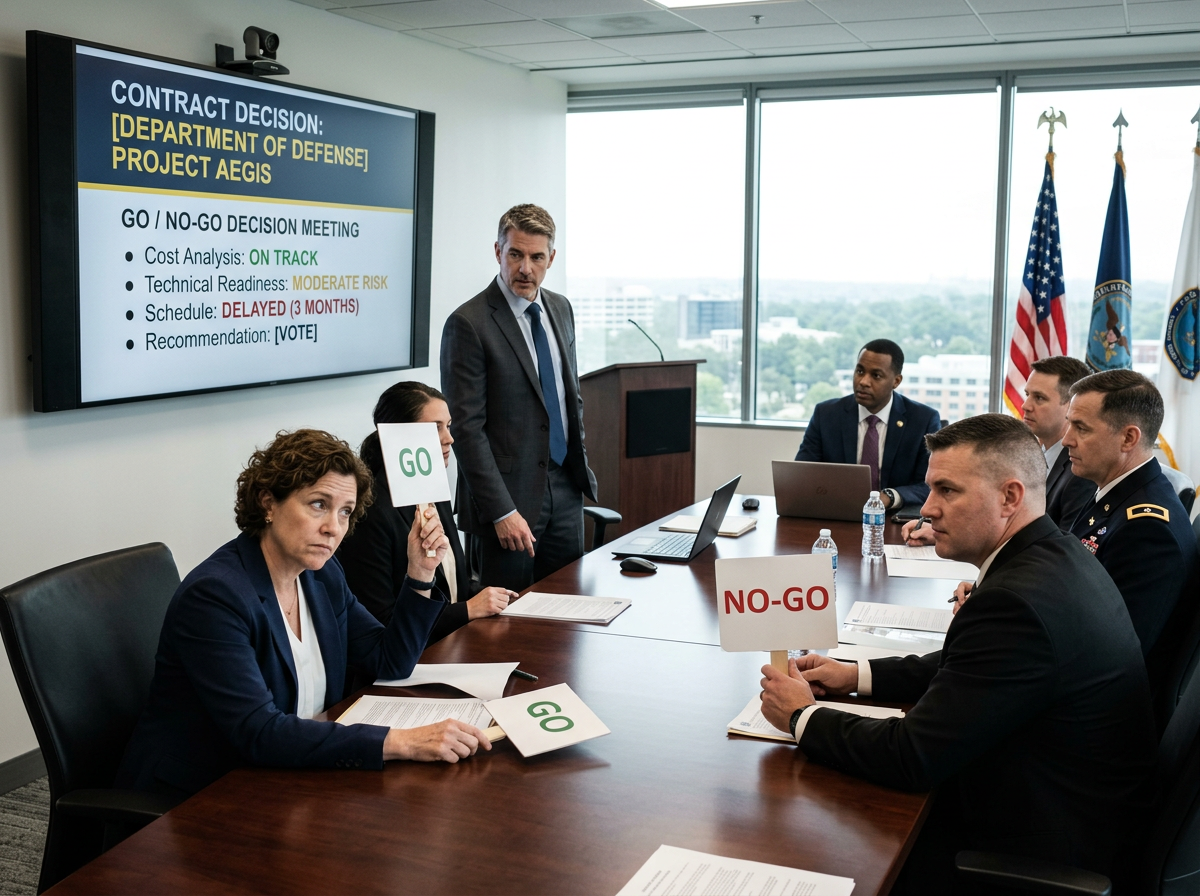
The Go/No-Go decision is a structured evaluation process used to determine whether an organization should pursue a specific opportunity.
It is not based on optimism. It is based on evidence.
Key Evaluation Criteria
1. Statement of Work (SOW) Alignment
A detailed analysis of the SOW is essential. Every requirement must be understood, not assumed. Misinterpretation at this stage leads to proposals that fail to meet expectations.
2. Evaluation Criteria Mapping
Government agencies clearly define how proposals will be evaluated. Whether the emphasis is on technical capability, cost, or past performance, your proposal must align with those priorities.
3. Internal Capacity Assessment
Can your organization realistically execute the contract? This includes staffing, financial resources, and technical expertise.
4. Competitive Positioning
Do you have a differentiator? If your proposal does not stand out, it will not succeed.
The Discipline of Saying No
One of the most important capabilities in government contracting is the ability to decline opportunities.
Saying no is not a failure. It is a strategic decision that preserves resources for opportunities where success is achievable.
The Impact on Win Rates
Organizations that implement a disciplined Go/No-Go process typically see:
- Higher win rates
- Improved proposal quality
- Reduced operational strain
- Better alignment with long-term strategy
This is not a theoretical improvement. It is a measurable outcome.
Final Thoughts
Winning in government contracting is not about chasing volume. It is about applying precision.
When you stop pursuing every opportunity and start selecting the right ones, your entire operation becomes more efficient, more focused, and more successful.
In this environment, discipline is not optional. It is the differentiator.